Sprint Triathlon Training Plan: A Comprehensive Guide
Embark on your triathlon journey with a meticulously crafted plan, available as a downloadable PDF, designed for beginners to advanced athletes seeking success.
Numerous resources offer 8-week and 12-week sprint triathlon training plans in PDF format, catering to diverse fitness levels and schedules.
Phil Mosley, a leading triathlon coach, provides free beginner, intermediate, and advanced sprint triathlon training plans as convenient PDF downloads.
These plans typically encompass 4-6 hours of weekly training, progressing from foundational endurance to race-specific preparation, including brick workouts.

Understanding the Sprint Triathlon
The sprint triathlon serves as an excellent entry point into the multi-sport world, offering a manageable challenge for newcomers and seasoned athletes alike; Typically, a sprint triathlon comprises a 750-meter swim, a 12-mile bike ride, and a 3.1-mile run – distances designed for accessibility and speed.
Many readily available sprint triathlon training plans, often found in PDF format, acknowledge this accessibility, structuring programs around building endurance and mastering transitions. These plans recognize that success isn’t solely about individual discipline prowess, but also about efficiently moving between swim, bike, and run.
PDF training guides frequently emphasize the importance of brick workouts – bike-to-run sessions – to simulate race conditions and prepare your legs for the immediate transition. Understanding the demands of each discipline and the transitions between them is crucial, and a well-structured PDF plan will guide you through this process, ensuring you’re prepared for race day.
Key Components of a Sprint Triathlon
A successful sprint triathlon hinges on proficiency in three core disciplines: swimming, cycling, and running. However, a comprehensive sprint triathlon training plan, often delivered as a convenient PDF, highlights that these aren’t isolated events. Transition efficiency – swiftly moving between each sport – is a critical, often underestimated, component.
PDF training plans typically dedicate sections to refining swim technique, building cycling aerobic capacity, and increasing running endurance. Strength training is also frequently incorporated to support performance and prevent injuries.
Furthermore, these plans emphasize the importance of rest and recovery, recognizing that adequate downtime is essential for adaptation and preventing burnout. A well-designed PDF will outline a structured progression, balancing intensity with recovery, and preparing you physically and mentally for the demands of race day, ensuring a fulfilling and successful experience.
8-Week vs. 12-Week Training Plans
Choosing between an 8-week and 12-week sprint triathlon training plan, often available as a downloadable PDF, depends largely on your current fitness level and experience. An 8-week plan is ideal for individuals with a reasonable base level of fitness, allowing for a rapid but focused build-up to race day.
These shorter plans typically involve 4-6 hours of training per week, prioritizing efficiency and race-specific preparation. Conversely, a 12-week plan provides a more gradual progression, suitable for beginners or those returning to fitness after a break.
The extended timeframe allows for a more thorough base-building phase, reducing the risk of injury and fostering sustainable improvements. PDF plans often detail weekly volume increases and intensity adjustments, catering to both timelines, ensuring a tailored approach to maximize performance.
Beginner, Intermediate, and Advanced Levels
Sprint triathlon training plans, frequently found as downloadable PDFs, are thoughtfully structured to accommodate varying experience levels: beginner, intermediate, and advanced. Beginner plans prioritize foundational fitness, focusing on completing the distances comfortably and establishing proper technique across all three disciplines.
These plans typically involve lower weekly volumes and intensities, emphasizing consistency over speed. Intermediate plans build upon this foundation, incorporating more challenging workouts and introducing speed work to improve performance.
Advanced plans are designed for experienced triathletes aiming to optimize their race times, featuring high-intensity intervals, brick workouts, and strength training. PDF resources from coaches like Phil Mosley offer tailored plans for each level, ensuring a progressive and effective training journey.

Phase 1: Base Building (Weeks 1-2)
Initiate your sprint triathlon preparation with a PDF-guided base building phase, focusing on establishing foundational endurance across swimming, biking, and running.
Focus on Foundation Endurance
During the initial phase, detailed in your sprint triathlon training plan PDF, prioritize building a solid aerobic base – the cornerstone of endurance performance.
This involves consistent, low-intensity workouts across all three disciplines, gradually increasing volume rather than intensity.
For swimming, focus on technique drills and completing manageable distances comfortably, as outlined in the PDF.
Bike workouts should emphasize sustained efforts at a conversational pace, building aerobic capacity over longer durations, guided by the plan’s schedule.

Running sessions should be easy-paced and focus on time on your feet, rather than speed, as detailed within the PDF’s running progression.
The goal is to improve your body’s ability to efficiently use oxygen, preparing it for the more demanding workouts to come, all clearly mapped out in the PDF.
Remember, consistency is key during this phase; adhere to the plan’s schedule for optimal results.
Swim Training: Technique and Distance
Your sprint triathlon training plan PDF will emphasize both swimming technique and gradually increasing distance. Initially, prioritize drills to refine your stroke, focusing on body position, catch, and pull.

These drills, detailed in the PDF, improve efficiency and reduce drag, crucial for a fast 750-meter swim.

Distance will progressively increase week by week, starting with manageable intervals and building towards continuous swimming.
The PDF will likely include workouts like 4x50m, 6x100m, and eventually longer sets, incorporating rest intervals.
Open water swimming practice, if accessible, is highly recommended, preparing you for race-day conditions.
Pay close attention to the PDF’s guidance on sighting and navigating in open water.
Remember to warm up properly before each swim and cool down afterward, as outlined in the plan.
Bike Training: Building Aerobic Capacity
The sprint triathlon training plan PDF will structure your bike workouts to build a strong aerobic base, essential for the 12-mile ride. Early weeks focus on consistent, moderate-intensity rides.
Expect the PDF to detail workouts involving sustained efforts at a conversational pace, gradually increasing duration.
These rides build endurance and improve your body’s ability to utilize oxygen efficiently.
The plan will likely incorporate longer rides on weekends, progressively extending the distance.
Cadence drills, as outlined in the PDF, will help you find an efficient pedaling rhythm.
Don’t neglect bike fit; a proper setup prevents injuries and maximizes power transfer.
The PDF may also suggest incorporating some hill work to build strength and power, preparing you for varied courses.

Phase 2: Endurance Development (Weeks 3-5)
The sprint triathlon training plan PDF emphasizes increasing volume across all disciplines, building stamina for longer swims, bikes, and runs.
Increasing Swim Volume
During Weeks 3-5 of your sprint triathlon training plan PDF, a key focus is progressively increasing your swim volume to enhance endurance. This phase moves beyond initial technique work and concentrates on building the stamina required to comfortably complete the 750-meter open water swim. Expect workouts to gradually lengthen, incorporating more continuous swimming with reduced rest intervals.
The PDF plan will likely detail specific sets, such as pyramid sets (increasing and decreasing distances) or longer, sustained swims with varied paces. Don’t be afraid to break down the 750m into manageable chunks during training, focusing on maintaining good form throughout. Consider incorporating drills to refine your stroke and improve efficiency. Remember to prioritize consistent attendance at swim sessions, as this is where significant gains will be made.
Pay attention to your body and adjust the volume if needed, preventing overtraining and ensuring you remain injury-free.
Bike Workouts: Longer Rides and Hills

As your sprint triathlon training plan PDF progresses through Weeks 3-5, the cycling component shifts towards building endurance and strength with longer rides and hill work. Expect a gradual increase in weekly mileage, preparing your legs for the 12-mile bike leg. The PDF will likely prescribe rides of varying durations, incorporating both steady-state efforts and challenging hill repeats.
Hill repeats are crucial for developing leg strength and improving your ability to handle inclines during the race. Focus on maintaining a consistent cadence and effort level on the climbs, and utilize the descents for recovery. Longer rides will build aerobic capacity and prepare you for the demands of sustained cycling.
Remember to practice proper bike fit and nutrition strategies during these longer workouts.
Run Training: Gradual Distance Increase
Your sprint triathlon training plan PDF, during Phase 2 (Weeks 3-5), emphasizes a progressive increase in running distance to prepare for the 3.1-mile run leg. This isn’t about speed yet; it’s about building the endurance base necessary to comfortably complete the distance. Expect the PDF to outline a schedule with incrementally longer runs each week, avoiding sudden jumps that could lead to injury.
Focus on maintaining a conversational pace during these runs – you should be able to hold a conversation without gasping for air. Incorporate easy recovery runs between harder efforts. Pay attention to proper running form to maximize efficiency and minimize the risk of overuse injuries.
The PDF may also suggest incorporating strides (short bursts of fast running) to maintain leg speed.

Phase 3: Speed Work & Brick Workouts (Weeks 6-7)
The sprint triathlon training plan PDF now introduces intensity with swim intervals, bike intervals, and crucial brick workouts to simulate race demands.
Swim Speed Intervals
During weeks 6 and 7, your sprint triathlon training plan PDF emphasizes swim speed intervals to boost your pace and endurance in the water. These workouts are designed to improve your anaerobic capacity and ability to maintain speed during the race’s 750-meter swim leg.
A typical interval session might involve swimming 50-meter or 100-meter repeats at a fast pace, followed by short recovery periods. For example, you could perform 10 x 100 meters with 20 seconds rest, focusing on maintaining good technique even when fatigued.
Progressively increase the number of repeats or decrease the recovery time as your fitness improves. Don’t neglect warm-up and cool-down laps before and after each interval session. The PDF plan will likely detail specific sets and distances, tailored to your experience level – beginner, intermediate, or advanced – ensuring a challenging yet achievable progression towards race day.
Bike Intervals and Strength Training
Your sprint triathlon training plan PDF incorporates bike intervals to enhance your cardiovascular fitness and leg power for the 12-mile cycling leg. These sessions alternate between high-intensity bursts and recovery periods, improving your ability to handle race-day surges and maintain a strong average speed.
Intervals might include 30-second sprints followed by 2-minute easy spinning, repeated several times. Complementing these, the PDF plan will likely include strength training exercises focusing on core stability and leg muscles – crucial for efficient cycling and preventing injuries.
Exercises like squats, lunges, and planks build the necessary strength. Remember to prioritize proper form over lifting heavy weights. The plan will detail the frequency and intensity of both bike intervals and strength training, tailored to your fitness level, ensuring optimal preparation for the race.
Brick Workouts: Bike-to-Run Transitions
A crucial component of any sprint triathlon training plan PDF is the “brick” workout – a back-to-back bike and run session. These simulate the race-day transition, teaching your body to run effectively with fatigued legs, a common challenge for triathletes.
Your PDF plan will likely start with shorter brick sessions, such as a 12-mile bike followed by a 1.5-mile run. As you progress, the distances will increase, building your endurance and improving your transition speed. The goal isn’t speed, but adaptation.
Focus on maintaining good running form even when your legs feel heavy. Practice quick transitions between the bike and run to minimize time lost during the race. Brick workouts are vital for race-day success, preparing you both physically and mentally for the demands of the sprint triathlon.
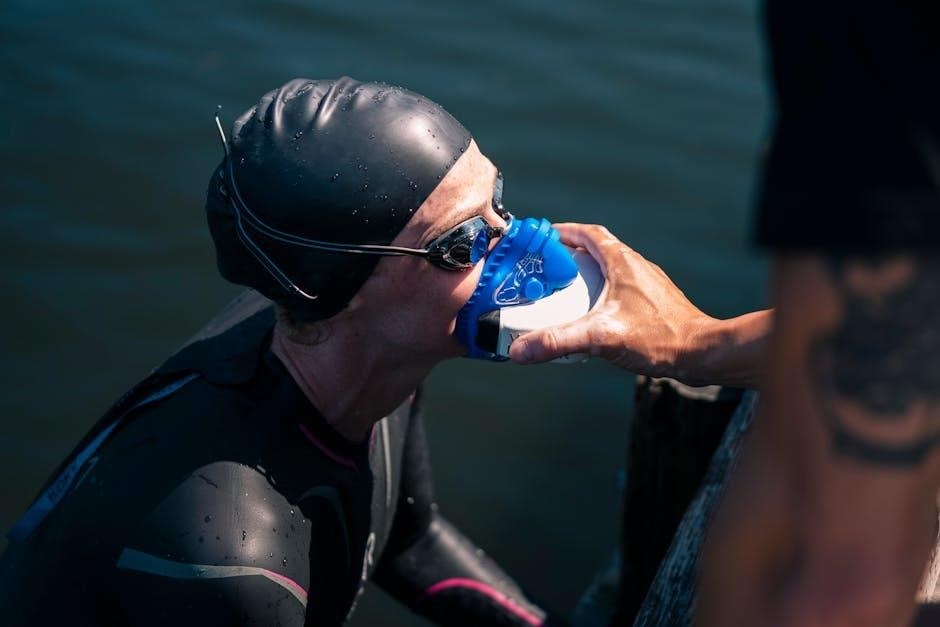
Phase 4: Race Preparation & Tapering (Week 8/12)
Your sprint triathlon training plan PDF culminates in final sharpening and tapering, reducing volume to ensure peak performance on race day.
Final Swim Sharpening
As you approach race day, your sprint triathlon training plan PDF will emphasize maintaining swim technique rather than drastically increasing distance. This phase focuses on short, high-intensity intervals to boost speed and refine your stroke efficiency. Expect workouts incorporating drills to improve body position, catch, and pull-through – crucial for a fast 750-meter swim.
Reduce overall swim volume to conserve energy, but include a few race-pace efforts to simulate race conditions. Open water swims, if accessible, are invaluable for practicing sighting and navigating. Review your pacing strategy and visualize a successful swim. The goal isn’t to build new fitness, but to ensure your existing capabilities are honed and ready for optimal performance. Downloadable PDFs often detail specific sets, like 6 x 50m at race pace with short rests, designed for this final sharpening stage.
Race Week Bike and Run Adjustments
Your sprint triathlon training plan PDF will now prioritize recovery and fine-tuning, significantly reducing volume on both the bike and run. Bike workouts should consist of short, easy spins to keep your legs fresh, focusing on maintaining cadence and practicing transitions. Avoid strenuous hill work or long rides that could induce fatigue. Run sessions should be similarly brief and relaxed, emphasizing form and avoiding any speed work.
Focus on nutrition and hydration, ensuring you’re adequately fueled for race day. Practice your race-day breakfast and hydration strategy. A short brick workout – a very easy bike followed by a short run – can help reinforce the bike-to-run transition. The downloadable PDF will likely recommend a complete rest day the day before the race, allowing your body to fully recover and prepare for peak performance.
Tapering for Optimal Performance
The final phase, detailed in your sprint triathlon training plan PDF, centers around tapering – strategically reducing training volume to allow your body to recover and supercompensate. This isn’t about becoming inactive; it’s about reducing stress while maintaining fitness. Expect a gradual decrease in swim, bike, and run distances over the final week or two, depending on whether you’re following an 8-week or 12-week plan.
Prioritize sleep and nutrition during this crucial period. Your PDF will likely emphasize maintaining hydration and consuming a balanced diet rich in carbohydrates to replenish glycogen stores. Resist the urge to cram in last-minute workouts; trust the work you’ve already done. Mental preparation is also key – visualize success and review your race strategy. A well-executed taper ensures you arrive at the start line feeling rested, strong, and ready to perform at your best.