This manual, printed April 2016, details the 2017 Ford Expedition. It provides crucial information for safe operation, maintenance, and understanding vehicle features.
Overview of the Manual’s Purpose
This 2017 Ford Expedition Owner’s Manual serves as a comprehensive guide for all vehicle owners. It aims to familiarize you with the vehicle’s operation, maintenance, and safety features. Information was accurate at the time of printing, offering details on controls, capabilities, and maintenance schedules.
Understanding this manual ensures safe and efficient vehicle use. It covers everything from basic operation to troubleshooting, helping owners maximize their Expedition experience and maintain its longevity.
Important Safety Information
Prioritize safety when operating your 2017 Ford Expedition. This manual highlights critical safety precautions, warnings, and best practices to prevent injury or accidents. Always adhere to all traffic laws and regulations.
Pay close attention to cautions regarding airbags, seatbelts, and child restraint systems. Proper usage is vital for occupant protection. Familiarize yourself with emergency procedures, including hazard light operation and jump-starting. Ignoring safety information can lead to serious consequences.

Understanding Your Vehicle
This section familiarizes you with the 2017 Expedition’s components. Learn about dashboard symbols, the instrument cluster, and the keyless entry/remote start system;
Dashboard Symbols and Indicators
Your 2017 Expedition utilizes a comprehensive system of dashboard symbols and indicators to communicate vital vehicle information. Understanding these alerts is crucial for safe operation and preventative maintenance. Illuminated symbols require immediate attention, while others provide status updates.
Pay close attention to warning lights related to engine function, braking systems, and tire pressure. Refer to the manual for detailed explanations of each symbol’s meaning and recommended actions. Ignoring these indicators could lead to more significant issues.
Instrument Cluster Details
The 2017 Expedition’s instrument cluster provides essential driving information at a glance. It prominently displays vehicle speed, engine RPM, fuel level, and coolant temperature. Additional displays show odometer readings, trip information, and selected gear.
The cluster also integrates warning lights and indicators, alerting you to potential vehicle issues. Customizable settings allow drivers to personalize certain display features. Familiarize yourself with all components for optimal driving awareness and safety.
Keyless Entry and Remote Start System
The 2017 Expedition offers a convenient keyless entry system. This allows unlocking doors and starting the engine without physically inserting the key. The remote key fob features buttons for locking, unlocking, and activating the panic alarm.
Remote start enables pre-conditioning the vehicle’s interior. Ensure the vehicle is in park, and follow the fob’s instructions for activation. Refer to the manual for specific range limitations and safety precautions regarding this system.
Operating Your 2017 Expedition
This section covers essential driving procedures. Learn how to safely start, stop, and operate your Expedition, including understanding available driving modes and controls.
Starting and Stopping the Engine
Before starting, ensure the vehicle is in Park or Neutral. Fully depress the brake pedal. Turn the ignition key to the start position and release once the engine starts. Avoid prolonged cranking. To stop the engine, shift into Park and turn the ignition key to the off position.
Always allow the engine to idle briefly before shutting off. This allows for proper oil circulation and cooling. Refer to the manual for specific instructions regarding remote start functionality and any associated safety precautions.
Driving Modes and Controls
The 2017 Expedition offers various driving controls for optimal performance. Steering wheel-mounted controls manage audio, cruise control, and voice commands. The gear selector allows shifting between Park, Reverse, Neutral, Drive, and manual select.
Understand the function of the accelerator and brake pedals. Familiarize yourself with the operation of the four-wheel drive system, if equipped, and its associated controls. Consult the manual for detailed explanations of each system and its proper usage.
Fueling and Fluid Checks
Regularly check fluid levels – engine oil, coolant, brake fluid, power steering fluid, and windshield washer fluid. Use the dipsticks and reservoir markings to ensure proper levels. Refer to the manual for specific fluid types and capacities.
When fueling, use the correct octane gasoline as specified. Avoid overfilling the tank. Inspect fuel lines and caps for damage. Promptly address any leaks or unusual smells. Maintaining proper fluid levels is crucial for optimal vehicle performance and longevity.

Maintenance and Care
Consistent maintenance ensures your 2017 Expedition’s reliability and longevity. Follow the recommended schedule for oil changes, tire rotations, and fluid inspections.
Recommended Maintenance Schedule
Your 2017 Ford Expedition requires a diligent maintenance plan for optimal performance. Regular inspections, as outlined in the owner’s manual, are crucial; Key intervals include oil and filter changes every 7,500-10,000 miles, tire rotations every 5,000 miles, and fluid level checks at each service.
Don’t neglect brake inspections, air filter replacements, and cabin air filter changes. Following this schedule helps prevent costly repairs and ensures a safe, reliable driving experience for years to come.
Oil Change Procedures
Maintaining proper oil levels is vital for your 2017 Ford Expedition’s engine health. The owner’s manual recommends using the specified oil type and filter. Warm up the engine, then safely lift the vehicle. Drain the old oil completely, replace the oil filter with a new one, and reinstall the drain plug securely.
Add the correct amount of fresh oil, checking the dipstick to confirm the level. Properly dispose of used oil at a recycling center. Regular oil changes extend engine life.
Tire Pressure Monitoring System (TPMS)
Your 2017 Ford Expedition features a Tire Pressure Monitoring System (TPMS) that alerts you when tire pressure is low. Maintaining correct tire pressure improves fuel efficiency and handling. The TPMS light illuminates on the dashboard when pressure drops significantly in one or more tires.
Check tire pressure monthly using a reliable gauge, and inflate tires to the recommended PSI found on the doorjamb sticker. Reset the TPMS after inflation, as outlined in the owner’s manual.
Features and Technology
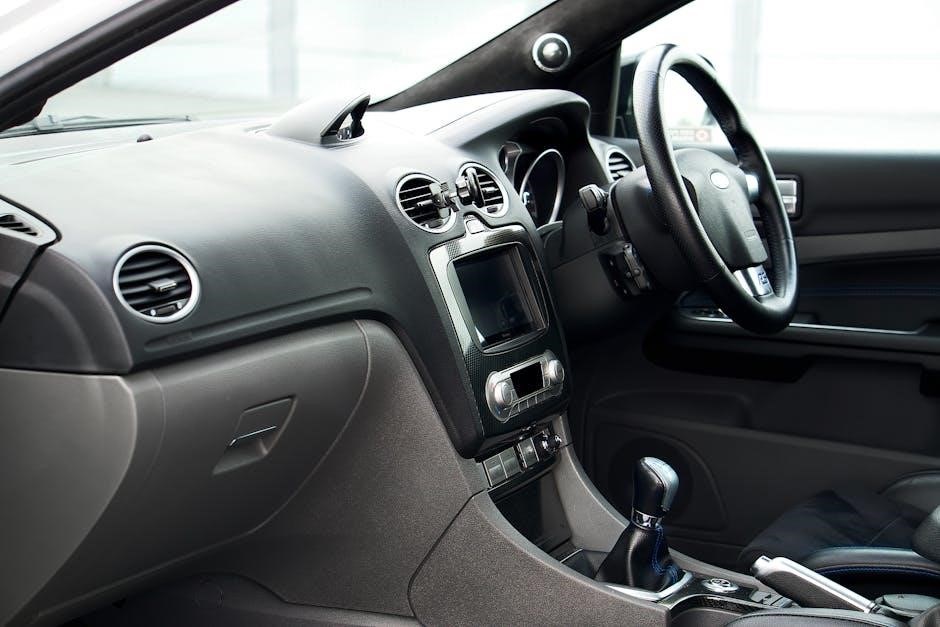
The 2017 Expedition boasts advanced technology, including the SYNC 3 infotainment system, a navigation system, and comprehensive audio controls for enhanced driving experiences.
SYNC 3 Infotainment System
The SYNC 3 system is a cornerstone of the 2017 Expedition’s technology. It offers a user-friendly touchscreen interface for controlling audio, navigation, and climate settings. Smartphone integration via Apple CarPlay and Android Auto is supported, allowing access to apps and features. Voice control enhances convenience, enabling hands-free operation of various functions. The system also provides access to FordPass, connecting the vehicle to a mobile app for remote control and vehicle health monitoring. Updates are available to improve performance and add new features.
Navigation System Operation
The 2017 Expedition’s navigation system provides turn-by-turn directions and points of interest. Users can input destinations via voice command or touchscreen entry. The system displays a map view with real-time traffic updates (subscription may be required). Route options allow customization based on preferences like fastest time or shortest distance. Map updates can be downloaded to ensure accuracy. The system integrates with SYNC 3, offering seamless control and display of navigation information.
Audio System Controls
The 2017 Expedition’s audio system, integrated with SYNC 3, offers diverse control options. Users can adjust volume, tuning, and source selection via steering wheel-mounted controls or the touchscreen display. Supported sources include AM/FM radio, SiriusXM satellite radio (subscription required), USB, and Bluetooth audio streaming. The system features customizable equalizer settings for personalized sound. Voice commands allow hands-free operation of many audio functions, enhancing driver safety and convenience.

Seating and Comfort
The 2017 Expedition prioritizes passenger comfort with adjustable seats and versatile configurations. Climate controls ensure a pleasant cabin environment for all occupants.
Seat Adjustments and Features
The 2017 Ford Expedition offers a range of seat adjustments for optimal comfort. Front seats typically include manual or power adjustments for position, recline, and lumbar support. Some trims feature heated and cooled front seats, enhancing comfort in various climates. Second-row seats often offer sliding and reclining capabilities, providing legroom and personalized comfort for passengers. Third-row seats may fold flat to maximize cargo space when not in use, offering flexible seating arrangements for passengers and gear.
Second and Third-Row Seat Configuration
The 2017 Expedition’s second and third rows offer versatile configurations. Second-row seats frequently feature a 60/40 split, allowing for varied passenger and cargo combinations. Power-folding options are available on higher trims for easy access to the third row. Third-row seats typically fold flat, creating a substantial cargo area. Some models include power-folding third-row seats, enhancing convenience. Understanding these configurations maximizes the Expedition’s utility for passengers and belongings, adapting to diverse needs.
Climate Control System
The 2017 Ford Expedition features a robust climate control system. Manual and automatic climate control options are available, depending on the trim level. These systems regulate temperature, airflow, and fan speed for optimal comfort. Dual-zone climate control allows independent settings for driver and passenger. Rear climate controls, often with separate fan settings, enhance passenger comfort in the second and third rows. Understanding these features ensures a pleasant cabin environment for all occupants during varying weather conditions.

Towing and Payload Capacity
This section details the 2017 Expedition’s towing capabilities and payload limits. Charts outline maximum towing weights, while information on weight distribution is included.
Towing Capacity Charts
Understanding your 2017 Ford Expedition’s towing capacity is crucial for safe operation. These charts detail maximum trailer weights based on engine type, drivetrain (2WD or 4WD), and axle ratio.
Always refer to these charts before towing to ensure you remain within specified limits. Exceeding these limits can compromise vehicle handling and safety.
Consider factors like gross vehicle weight rating (GVWR) and gross combined weight rating (GCWR) when calculating total weight. Proper weight distribution is also essential.
Trailer Sway Control System
Your 2017 Ford Expedition features Trailer Sway Control, enhancing towing stability. This system automatically applies brakes to individual wheels to counteract trailer sway, helping maintain control. It works in conjunction with the vehicle’s stability control system.
The system is most effective when the trailer is properly loaded and weight distribution is correct.
Regularly inspect trailer connections and tires. Remember, this system assists, but doesn’t eliminate, the need for cautious towing practices.
Weight Distribution and Hitch Information
Proper weight distribution is critical for safe towing with your 2017 Ford Expedition. Ensure approximately 10-15% of the trailer weight is on the hitch. Utilize a weight-distributing hitch for heavier trailers to level the vehicle and improve handling.
Consult the Towing Capacity Charts for maximum towing limits. Verify the hitch receiver is properly installed and rated for the trailer’s weight. Regularly inspect hitch components for wear or damage.

Emergency Assistance
Ford provides a Roadside Assistance Program for Expedition owners. Utilize emergency flashers for hazards, and understand jump-starting procedures for a dead battery.
Roadside Assistance Program
Your 2017 Ford Expedition includes a comprehensive Roadside Assistance Program, offering peace of mind on the road. This service provides assistance with jump starts, tire changes, fuel delivery (if stranded), towing to a Ford dealership, and lockout assistance. Coverage details and claim procedures are outlined within the warranty information section of this manual. Accessing this program can be crucial in emergency situations, ensuring prompt help when you need it most. Contact information for Ford Customer Service is also provided for immediate support.
Emergency Flashers and Hazard Lights
The emergency flashers, also known as hazard lights, are vital for alerting other drivers to a potential hazard. Activated by the red triangle button on your dashboard, they cause all turn signals to flash simultaneously. Use them when your vehicle is stopped or moving slowly due to a breakdown, accident, or any situation creating a traffic risk. Ensure visibility by utilizing these lights, especially during inclement weather or low-light conditions, to enhance safety for yourself and others on the road.
Jump Starting Procedures
If your Expedition’s battery is depleted, a jump start can help. First, position a second vehicle close enough for the jumper cables to reach, but do not let the vehicles touch. Connect the red cable to the positive (+) terminal of the discharged battery, then to the positive terminal of the good battery. Connect the black cable to the good battery’s negative (-) terminal, and finally to a grounded metal surface on your Expedition. Start the good vehicle, then your Expedition.
Technical Specifications
This section outlines key details of your 2017 Expedition. Discover engine specifics, transmission information, and crucial dimensional and capacity measurements for informed understanding.
Engine Specifications
Your 2017 Ford Expedition is equipped with a powerful engine designed for both performance and reliability. The standard engine is a 3.5L EcoBoost V6, delivering substantial horsepower and torque for towing and everyday driving. Specific output varies based on configuration, with options including enhanced power for heavier-duty tasks.
Detailed information regarding compression ratio, firing order, and recommended fuel type are provided within this section. Understanding these specifications is crucial for optimal engine performance and longevity, ensuring your Expedition operates efficiently for years to come.
Transmission Details
The 2017 Ford Expedition utilizes a sophisticated automatic transmission system, engineered for smooth and responsive shifting. Typically, this is a 6-speed automatic transmission, optimized to handle the vehicle’s substantial power and towing capacity. Understanding the transmission’s operation is key to maximizing fuel efficiency and ensuring long-term reliability.
This section details fluid type requirements, maintenance schedules, and potential troubleshooting tips. Proper transmission care, including regular fluid checks and changes, is vital for preventing costly repairs and maintaining optimal performance throughout the lifespan of your Expedition.
Dimensions and Capacities
The 2017 Ford Expedition boasts substantial dimensions, offering ample space for passengers and cargo. Overall length typically ranges around 221.3 inches, with a width of 79.2 inches and a height of approximately 76.1 inches. These measurements are crucial for parking and navigating tight spaces.
Key capacities include a fuel tank volume of around 28.3 gallons and a maximum payload capacity varying by configuration. Understanding these figures aids in safe loading and towing practices, ensuring optimal vehicle performance and stability.

Troubleshooting Common Issues
This section addresses frequent concerns like warning lights and minor mechanical problems. Battery maintenance and replacement guidance are also included for owner assistance.
Common Warning Light Meanings
Understanding dashboard warning lights is crucial for vehicle health. The manual details each symbol, explaining potential issues ranging from low oil pressure to brake system malfunctions. Ignoring these lights can lead to costly repairs.
Pay close attention to the illumination of the check engine light, as it indicates a broad spectrum of potential engine problems requiring diagnosis.
Other important lights include those for the anti-lock braking system (ABS), tire pressure monitoring system (TPMS), and airbag system, each signaling specific safety concerns.
Addressing Minor Mechanical Problems
The owner’s manual provides guidance for resolving simple issues. This includes checking fluid levels – oil, coolant, brake fluid, and windshield washer fluid – and ensuring proper operation.
It also covers basic troubleshooting steps, like inspecting and replacing wiper blades, or checking the battery connections for corrosion.
However, for complex repairs or issues involving safety-critical systems, the manual strongly advises seeking professional assistance from a qualified Ford technician.
Battery Maintenance and Replacement
Maintaining a healthy battery is crucial for reliable starting. The manual recommends periodic inspection for corrosion around terminals, cleaning as needed with a baking soda solution.
It details proper jump-starting procedures to avoid damage to the electrical system, emphasizing correct cable connection order.
When replacement is necessary, the manual specifies the correct battery group size and cold-cranking amps (CCA) for optimal performance, and stresses disconnecting the negative terminal first.

Warranty Information
This section outlines the Ford Expedition’s warranty coverage details. It explains claim procedures, durations, and what components are protected against defects.
Warranty Coverage Details
The 2017 Ford Expedition’s warranty provides peace of mind. It typically includes a basic warranty covering defects in materials or workmanship for a specified period, like 3 years/36,000 miles. A powertrain warranty often extends longer, perhaps 5 years/60,000 miles, protecting the engine and transmission.
Specific coverage varies; review your warranty booklet for exact terms, exclusions, and claim procedures. Ford also offers service contracts for extended protection beyond the initial warranty period. Proper maintenance, as outlined in the owner’s manual, is crucial for warranty validity.
Claim Procedures
To initiate a warranty claim for your 2017 Ford Expedition, first contact your authorized Ford dealership’s service department. Clearly describe the issue and provide documentation, like repair orders and maintenance records. The dealership will diagnose the problem and determine if it’s covered under warranty.
If approved, the dealership will submit the claim to Ford. Keep copies of all paperwork. For assistance, contact Ford Customer Service – details are in the owner’s manual index. Timely reporting and adherence to procedures are vital for successful claims.
Index and Contact Information
A comprehensive alphabetical index aids in locating specific topics within this 2017 Expedition manual. Ford Customer Service contact details are also provided for assistance.
Alphabetical Index of Topics
This detailed index serves as a quick reference guide to locate information within the 2017 Ford Expedition Owner’s Manual. Entries are arranged alphabetically, covering a wide range of subjects – from audio system controls and battery maintenance to towing capacity and warranty details.
Look for keywords related to your query, enabling efficient navigation through the manual’s extensive content. The index is designed to pinpoint specific sections, saving you valuable time and ensuring you find the information you need quickly and easily.
Ford Customer Service Contact Details
For assistance beyond this 2017 Ford Expedition Owner’s Manual, Ford provides multiple avenues for customer support. Visit ford.ca or owner.ford.com for online resources, frequently asked questions, and owner guides.
You can also reach Ford Customer Relationship Center directly for personalized assistance. Details regarding phone numbers and mailing addresses are typically found within the warranty information section of the manual, ensuring prompt resolution of any concerns you may encounter.